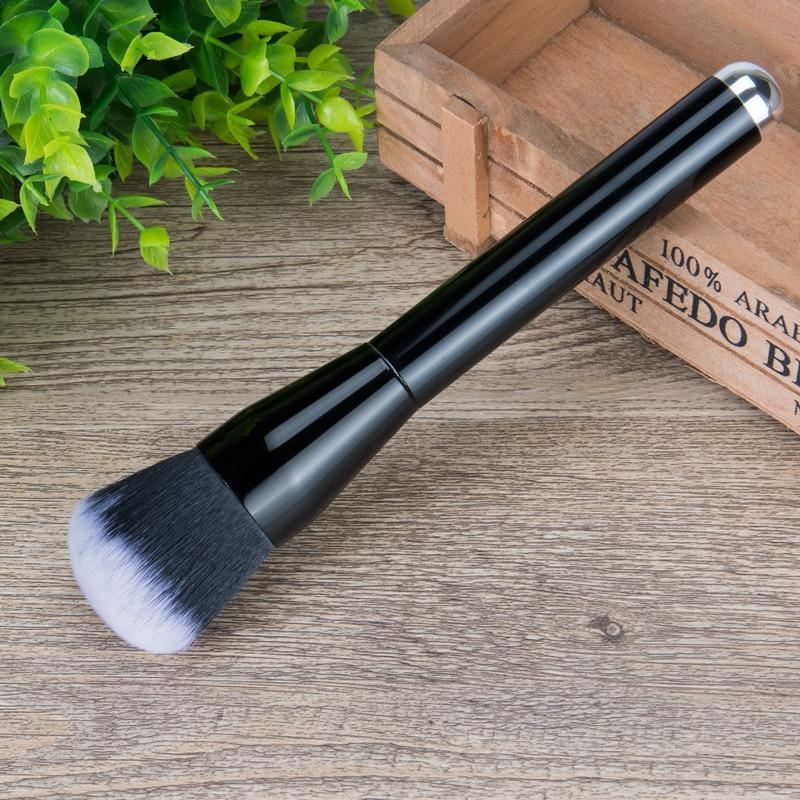
Large Makeup Powder Brush – The Oversized Tool for Flawless, Fast Coverage
You get better blending in half the time. That alone explains why so many makeup artists and everyday users now prefer massive powder brushes over the compact ones that used to dominate vanity tables.
What Makes a Powder Brush "Large" or "Extra Large"?
Size matters here. A brush labeled "large" usually has a head diameter between 4.5 and 6 cm. Anything above that falls into "extra large" or "massive" territory. The handle is often longer too, which gives you better control when sweeping product across your forehead, cheeks, and jawline in broad strokes.
The bristles are the real star. Most high-quality large brushes use synthetic fibers that mimic natural hair but hold up better against cream and liquid formulas. Face makeup brush options at Demirrorstore often feature UltraPlush bristles, which are dense enough to pick up plenty of powder but soft enough to blend without streaking.
Key Design Features
- Dome or rounded shape: Fits the curves of your face naturally
- Tapered edges: Allows precision around the nose and under eyes
- Flexible bristles: Prevents harsh lines and product buildup
- Weighted handle: Balances the oversized head for steady application
Why Choose a Very Large Brush for Makeup Powder Application?
But there is more. Larger brushes deposit less product per stroke, which prevents that chalky, overdone look. You build coverage gradually, layering translucent powder or bronzer until you hit the exact intensity you want. It is hard to overdo it, even if you are heavy-handed.
Who Benefits Most from Extra Large Powder Brushes?
- Busy professionals: Need fast, reliable application in under five minutes
- Mature skin types: Large, fluffy bristles do not settle into fine lines
- Oily skin users: Can quickly set makeup across the T-zone without disturbing foundation
- Stage performers and content creators: Require full-face coverage that photographs well under harsh lighting
How to Use a Brush for Powder Large Correctly
- Load the brush: Swirl it lightly in your powder, then tap the handle against your palm twice to shake off excess.
- Start at the center: Apply to your forehead, nose, and chin first. These areas tend to get oily fastest.
- Work outward: Sweep toward your hairline and jawline using light pressure. Let the weight of the brush do the work.
- Blend the edges: Use the tapered sides to feather product into your hairline and neck for a seamless transition.
Never press down hard. A high-density brush picks up plenty of product on its own. If you grind it into your face, you will disrupt your foundation and end up with patches.
Common Mistakes to Avoid
- Overloading the brush: Causes uneven, blotchy application
- Skipping the tap-off step: Leaves powder clumps on your face
- Using back-and-forth motions: Creates streaks instead of a smooth finish
- Applying too much pressure: Removes foundation underneath
Choosing Between Loose Powder and Pressed Powder for Large Brushes
Loose powder is better for setting makeup without adding extra coverage. The fluffy, airy texture pairs perfectly with the soft bristles of an extra-large powder brush. You get that barely-there, second-skin effect that does not look or feel heavy.
Pressed powder is the go-to for touch-ups and travel. It is compact, does not spill, and gives you more control over how much product you pick up. If you need to build coverage or mattify specific areas, pressed powder works faster.
| Feature | Loose Powder | Pressed Powder |
|---|---|---|
| Finish | Sheer, natural | Medium to full coverage |
| Best for | Setting makeup at home | On-the-go touch-ups |
| Application | Requires tapping off excess | Direct pickup, less mess |
| Blendability | Extremely easy | Moderate, needs buffing |
Cleaning and Maintaining Your Massive Powder Brush
Step-by-Step Cleaning Process
- Wet the bristles: Run them under lukewarm water, keeping the ferrule (metal part) angled downward to prevent water seeping into the handle.
- Apply cleanser: Use a dime-sized amount of brush soap or baby shampoo. Work it into the bristles with your fingers.
- Rinse thoroughly: Keep rinsing until the water runs clear and no soap bubbles remain.
- Reshape and dry: Gently squeeze out excess water, reshape the brush head, and lay it flat on a towel to air dry overnight.
Best Makeup Formulas to Use with a Big Brush Powder
Recommended Product Types
- Translucent setting powder: Sets foundation without altering color
- Mineral foundation: Buildable coverage that looks natural
- Bronzer: Adds warmth and dimension to the face
- Blush: Soft, diffused color on cheeks
- Highlighter (in powder form): Delivers a subtle glow without glitter chunks
If you use liquid or cream products, switch to a denser, flat-topped brush. Large fluffy brushes do not work well with wet formulas. They absorb too much product and do not blend evenly.
Frequently Asked Questions
Large brushes are too big for precise contouring. Use a smaller, angled brush for contouring. Save your large brush for blending out harsh lines after contouring to soften the overall look.
Synthetic bristles are cruelty-free, easier to clean, and work better with liquid and cream products. Natural hair bristles are softer and pick up powder more easily but require gentler cleaning and are not vegan.
Not necessarily. One large powder brush can handle setting powder, bronzer, and blush if you clean it between color products. But having two brushes speeds up your routine and prevents color contamination.
Streaking happens when bristles are too stiff, the brush is overloaded with product, or you press too hard during application. Use a lighter hand and ensure your brush is clean and properly dried.
Yes, but pack it carefully. Use a brush guard or sleeve to protect bristles from bending. Some brands sell travel-sized versions of their large brushes that fit more easily in makeup bags.
Extra large brushes typically have a head diameter of 5.5 cm or more. Anything smaller falls into the standard or large category. Check product specifications before buying if size matters to you.